
Key Takeaways
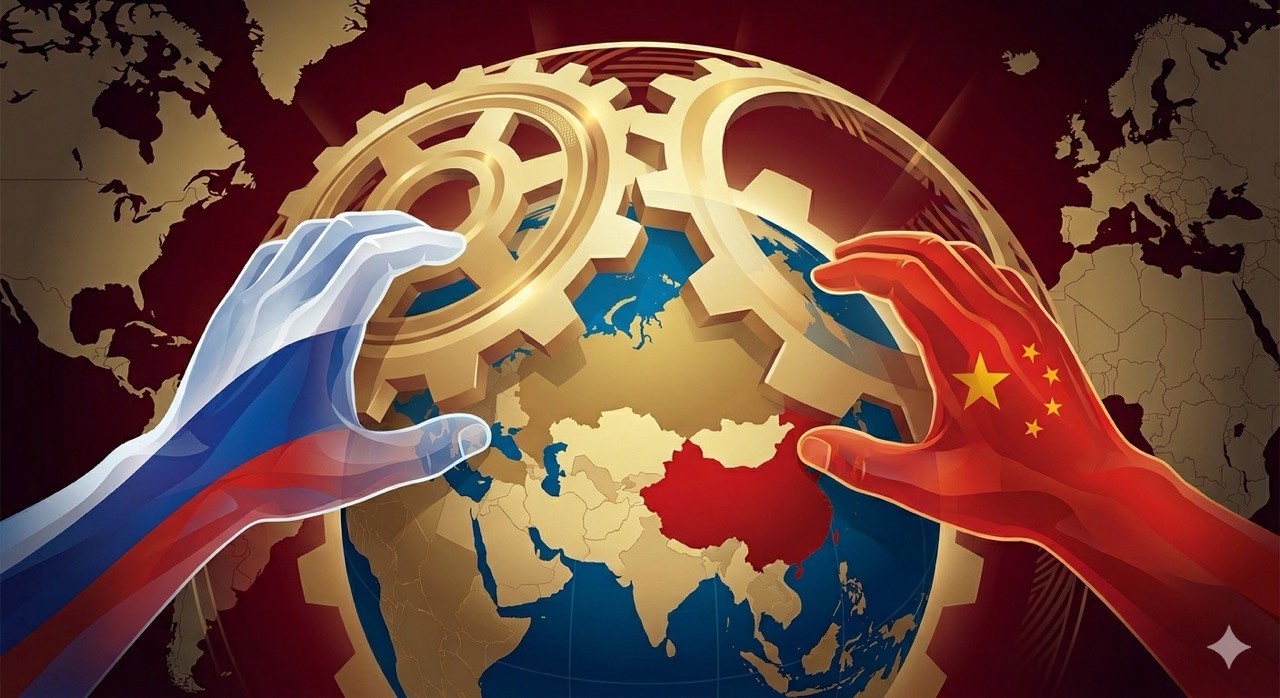
- China’s growing influence in the Global South is driven by an approach that combines economic engagement, infrastructure development and a principle of non-interference, creating a challenge to the Western-led liberal international order.
- Peru’s traditional diplomatic posture as a reliable partner of the US in the Andean region has undergone a significant transformation, culminating in a prioritized strategic alignment with Beijing.
- This change in diplomatic heading is driven by a stark contrast in external approaches: the US is increasingly viewed as an inconsistent partner prone to protectionism, while China offers tangible infrastructure lending, resource monetization and a shared developing-nation solidarity.
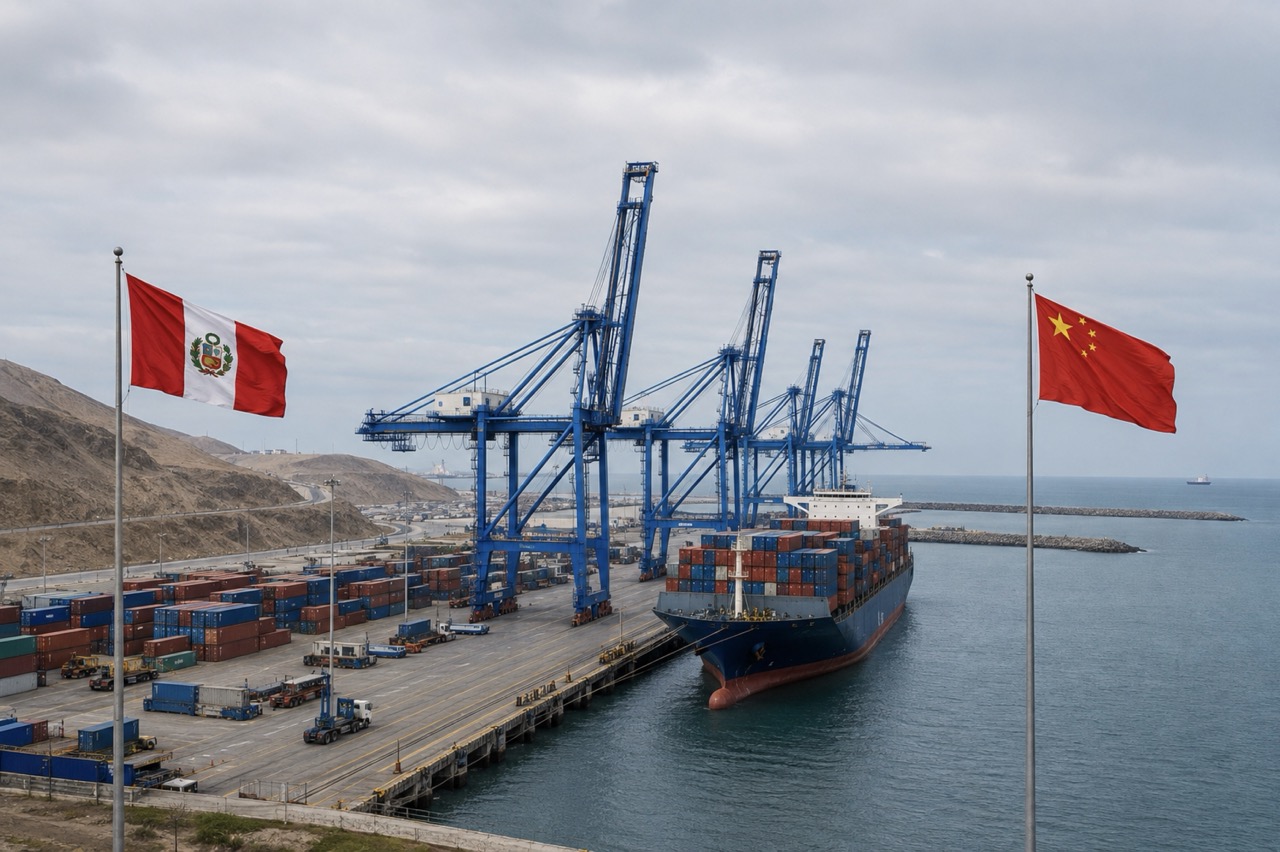
- The completion of the mega-port of Chancay serves as a material manifestation of Peru’s redefined geopolitical role, shifting the country's policy focus to become South America's primary logistical gateway to the Asia-Pacific.
- Peru’s pivot is driven by pragmatic economic balancing rather than an ideological break with the West, as Lima actively maintains its democratic identity and security ties with the US to preserve its autonomy.
- If the EU wishes to counter Chinese systemic consolidation in Latin America, it must move past purely rhetorical commitments and deliver competitive, actionable infrastructure investments through instruments like the Global Gateway.
- Frequent socio-environmental conflicts surrounding Chinese projects expose the vulnerabilities of Beijing’s extractive model, creating an opportunity for the EU to differentiate itself through a transparent, values-driven partnership focused on local industrialization and community infrastructure.
Introduction
In EuroHub4Sino Policy Paper 2026/1, Garlick and Senz explained how China is altering the international landscape by systematically establishing new norms and alliances throughout the Global South. Their analysis demonstrated that China's engagement strategy, which relies heavily on trade, practical infrastructure investments, and a principle of non-interference, is proving successful because it aligns closely with the immediate economic needs of developing countries. This creates a challenge to the Western-led liberal international order. [1] This paper provides a case study examining how these broader dynamics are reflected in Peru's recent strategic shift towards Beijing.
Over the past decade, Latin America’s geopolitical and economic landscape has changed significantly. Historically, the Andean region was regarded as an area of strong US influence. However, China has steadily expanded its economic and political engagement across the continent through trade, investment and initiatives such as the Belt and Road Initiative (BRI). By offering infrastructure financing and emphasizing economic cooperation without interfering in domestic political affairs, Beijing has become a major partner for many Latin American countries.
Peru illustrates these broader regional trends, as the country has moved beyond its traditional position as a close partner of the US by diversifying its foreign and economic relations and seeking to position itself as a logistical hub for South America. [2] Growing economic ties with China, particularly through major infrastructure projects such as the Port of Chancay, have strengthened Peru’s role as an important destination for Chinese investment in the region. [3] These developments have important implications for the EU. As Latin American countries deepen their engagement with China while pursuing increasingly diversified foreign policies, the EU must adapt its approach to the region. Maintaining economic and political relevance will require identifying areas where the European model of cooperation can complement the priorities of Latin American partners in an increasingly multipolar environment.
The drivers of Peru’s policy shift
Drawing on a study of Latin America’s geopolitical landscape between 2015 and 2025, based on a discourse analysis of Peru’s foreign policy guidelines and official narratives toward the US and China, it is evident that the region has undergone significant changes. Historically, US involvement in Latin America has often been perceived as paternalistic, contributing to enduring institutional skepticism. [4] In the last decade, US foreign policy toward the region has been characterized by strategic inconsistency, marked by periods of heightened engagement followed by phases of limited attention. While Washington has continued to emphasize the importance of maintaining influence in Latin America, its level of involvement has often fluctuated depending on broader global priorities and domestic political developments. When the US does engage, it often relies on defensive warnings against Chinese economic coercion without offering competitive domestic alternatives for capital or infrastructure funding. [5]
Another core challenge was the rise of protectionist trade policies. Although the tariffs introduced during the first Trump administration were primarily aimed at countering China, their broader economic effects were also felt by smaller economies integrated into global trade networks, with Peru among the countries significantly affected. [6] While Washington continued to warn regional partners about the potential risks of overdependence on China, it failed to provide a comparable economic alternative or engagement strategy. This created a policy vacuum in which Peru increasingly questioned the reliability of its traditional partner and sought to diversify its external relations. [7] Consequently, Peru began to reassess its foreign policy approach, rebuilding its economic and strategic self-image around greater autonomy and the search for more reliable partners.[8]
The Chinese development offer
In contrast, China operates with a highly pragmatic package of statecraft. Beijing provides state-backed credit for large-scale physical infrastructure projects that Western financial institutions and private capital have largely ignored due to associated risks. [9] With the growing perception of the US as a less predictable partner, Peru increasingly sought to diversify its external relations. At the same time, the country faced significant development and infrastructure gaps that required substantial investment. China’s willingness to provide financing and support for large-scale infrastructure projects created strong incentives for Peru to deepen its economic engagement with Beijing.
Furthermore, China’s rhetorical appeal has contributed to its growing influence in Latin America by framing its engagement as a form of South-South cooperation among developing nations. Beijing presents its partnerships as based on equality, mutual benefit and “win-win” cooperation. This narrative has proven attractive to many Latin American states seeking greater autonomy in their foreign relations and alternatives to traditional partners. However, the emphasis on partnership and mutual benefit can also obscure emerging patterns of dependency, which can be interpreted as the formation of new core-periphery dynamics. [10]
The Chancay port and Peru’s emerging role as a gateway to Asia
Facing significant infrastructure and development gaps, Peru has adopted a more diversified foreign policy, with China emerging as a key economic partner due to its willingness to finance large-scale infrastructure projects aligned with Peru’s development priorities. [11] The Chancay megaport represents the centerpiece of this growing partnership, reflecting Peru’s ambition to strengthen its position as a regional logistics hub and enhance its connectivity with global markets. [12]
Through this port, Peru establishes a direct maritime link to the East, which has repositioned the country as a gateway to Asia and the Pacific. Funded by massive Chinese investment and integrated into the BRI, the port accelerates Peru’s national development and connectivity. [13] By acting as a central logistical anchor, the Chancay port allows Latin America to connect more seamlessly with Chinese markets, which has also fulfilled Peru's foreign policy goal of acting as a bridge of stability between the two regions. [14] As Peru pursues greater connectivity, it has increasingly deepened its relationship with Beijing, while the US has lost appeal due to strategic inconsistency and limited infrastructure financing. [15] Although the Chancay port offers significant economic opportunities, its long-term benefits are accompanied by socio-environmental challenges, including infrastructure damage, disruptions to local livelihoods and concerns over debt dependence and emerging core-periphery dynamics.
Peru’s foreign policy of strategic autonomy
While Peru has increasingly prioritized its relationship with China, this shift should not be interpreted as an attempt to replace one hegemonic partner with another. Rather, Peruvian foreign policy reflects a pragmatic foreign policy change that views China primarily as a development partner capable of delivering tangible economic benefits. Official discourse therefore consistently emphasizes infrastructure, trade, investment and connectivity, which frames the cooperation with Beijing as a means of achieving national modernization. [16] In this sense, China’s attractiveness stems less from its status as a rising great power than from its willingness to finance large-scale development projects, such as the Chancay Port, without imposing extensive political conditionalities.
However, Peru remains aware of the risks associated with excessive dependence on any single external partner. For example, deeper cooperation with China has raised concerns related to environmental and social impacts, particularly in the mining sector, as well as issues of transparency and corruption. [17] For this reason, Peru’s 2024 foreign policy guidelines emphasize the importance of maintaining a pragmatic and autonomous approach to its external partnerships. [18]
While China has become its leading economic partner, Peru continues to maintain important ties with the US in areas such as security cooperation, counter-narcotics efforts and education. [19] Its foreign policy therefore reflects a strategy of diversification, seeking to maximize the economic benefits of cooperation with China while preserving a constructive relationship with Washington. At the same time, Peru’s deepening relationship with Beijing represents a pragmatic choice for national development rather than an ideological realignment. Throughout its foreign policy guidelines and official discourse, Peru consistently reaffirms its commitment to democracy, human rights and the rule of law, thereby preserving its identity as a democratic state. [20] Consequently, while China is valued as a partner for infrastructure and trade, Peru’s foundational political values remain aligned with the US and the broader Western order.
The Peruvian case also carries broader implications for Latin America. First, it suggests that regional governments increasingly evaluate external partners according to their ability to deliver concrete developmental outcomes rather than based on ideological or normative alignment. Next, it highlights the growing importance of strategic diversification, as Latin American states seek to reduce their vulnerability by maintaining productive relations with multiple major powers instead of relying exclusively on a single patron. Finally, Peru demonstrates that the intensifying rivalry between the US and China has expanded the diplomatic space available to Latin American countries, allowing them to exercise greater agency and negotiate partnerships that better reflect their own national interests. As a result, Latin America should not be viewed merely as an arena for great power competition, but as a region whose states are actively pursuing their own strategic and economic interests in an increasingly multipolar world.
EU’s environmental approach as an alternative to extractive models
These developments also carry implications for the EU. If Latin American states are increasingly guided by pragmatic development priorities and diversified foreign policies, the EU will need to adapt its engagement accordingly. Understanding Latin American countries as strategic actors rather than passive recipients of external influence is essential for developing an effective and mutually beneficial partnership with the region.
While Chinese state-owned enterprises provide massive infrastructure and mining investments, they frequently fall short of environmental and social standards. In Peru, Chinese-operated projects like the Las Bambas copper mine have sparked recurrent socio-environmental conflicts. [21] Local communities frequently protest over land access, dust and noise pollution and the depletion of water resources in vulnerable high-Andean wetlands, noting that neighboring indigenous communities often lack safe access to water while the mine seamlessly secures its own permits. [22]
Additionally, projects like the Chancay port have caused severe physical and ecological collateral damage, including sunken streets, cracked houses, paralyzed local fishing and the expansion of extractive logistics networks that threaten to push the Amazon rainforest over the edge. [23] The EU should therefore highlight the environmental and social risks associated with such investment practices and position itself as an alternative partner by promoting sustainable investment models that place greater emphasis on local communities and long-term development outcomes.
Building a Competitive EU Partnership Model for Peru
Peru's government recognizes the risks of excessive dependence on a single partner and actively seeks “strategic autonomy” to safeguard its political independence. [24] While Chinese capital is highly attractive, the lack of transparency in inter-state loans and the asymmetrical nature of these trade agreements may expose Peru to debt diplomacy and an unbalanced core-periphery dependency. [25] The EU should take advantage of this opportunity to deepen its engagement with Peru by supporting the country’s long-term development priorities. Greater cooperation in areas such as technology transfer, innovation and sustainable industrial development could strengthen Peru’s domestic capacities and promote higher-value economic activities.
To provide a stronger alternative to the BRI, the EU should accelerate the implementation of its Global Gateway strategy and strengthen its visibility through concrete projects in Latin America. The focus should now be on translating its commitment to mobilize €45 billion in investments for Latin America and the Caribbean by 2027 into tangible infrastructure projects that contribute to long-term economic development and regional connectivity. [26]
In Peru, the Global Gateway already addresses several key development priorities, including projects in areas such as water infrastructure, wastewater treatment and renewable energy connectivity. [27] However, to further strengthen its role as a strategic partner for Peru, the EU should focus on areas that go beyond traditional infrastructure financing. While China has played an important role in developing large-scale transport and resource-related projects, the EU can now focus on areas that have received less attention.
Powershoring and the transition toward value-added industrialization
China’s engagement model in Peru remains heavily skewed toward a primary-export system, extracting critical minerals such as copper and lithium to feed its domestic manufacturing base while leaving Peru at the bottom of the global value chain. [28] Concurrently, while the EU aims to avoid a policy of extraction, its current investments largely focus on implementing greener, more sustainable mining practices rather than transforming the underlying economic model. [29]
To become the preferred partner in Latin America, the EU must move past declaratory statements by committing real capital, aligning with local industrial policy and maintaining high environmental and social standards. Crucially, the EU should support “powershoring” by relocating energy-intensive processing to Latin American countries that possess abundant renewable energy. [30] In practice, this requires the EU to pivot toward investing in value-added processing and advanced manufacturing within Peru. Rather than limiting financing to raw extraction, European capital should underwrite local refining plants, battery component manufacturing and assembly hubs. This change would strengthen local economies and demonstrate that European investments are aimed more at supporting mutual industrialization than at facilitating the extraction of raw materials. This approach should also emphasize that cooperation with Latin American states such as Peru is based on an equal partnership, distinguishing it from models of engagement that are often perceived as more hierarchical.
Building digital capacity through EU-Peru cooperation
China has become a primary provider of hard digital infrastructure in Latin America, particularly in 5G networks. However, the EU is positioned to differentiate its engagement by focusing on digital governance and institutional transparency. The EU has already laid a strong foundation through the EU-LAC Digital Alliance which includes the extension of the BELLA fiber-optic network to Peru in 2026, the newly launched EU-LAC Supercomputing Network for AI and regional satellite initiatives supporting e-government services and secure public-sector networks. [31]
To maximize these investments, the EU should build upon these existing frameworks and agreements, such as the 2026 PROINVERSIÓN partnership on AI, by expanding targeted support for civic technology, AI-based public procurement auditing and open-source data platforms. [32] This would allow the EU to translate its digital infrastructure rollouts directly into improved institutional governance and anti-corruption tools for Peru.
Sustainable agriculture and technological innovation
China is a massive consumer of Peruvian agricultural exports, yet it invests negligible resources into the long-term sustainability or climate resilience of the country’s food systems. Furthermore, Chinese infrastructure projects frequently threaten vital agricultural land and water resources. As Peru's third-largest trading partner and a major importer of its vegetable products, fruits and coffee, the EU also exhibits a strategic gap. Its large-scale infrastructure investments rarely target the technological modernization of the rural farming sector. Instead, the current focus lies primarily on ecological sustainability and digitalization, which are important areas, but there remains significant untapped potential for broader cooperation. [33]
The EU should therefore focus on investments in precision agriculture, climate-resilient crop technology and smart irrigation networks. Deploying this technology to the Andean subregion would secure the EU’s own sustainable food supply chains while directly improving the livelihoods of rural Peruvian communities that have often been marginalized by the state and exploited by foreign mining interests.
Another recurring vulnerability in China's regional strategy is the failure to deliver on promised social infrastructure. In major initiatives like the Las Bambas mine, Chinese companies have frequently promised hospitals, schools and clean water pipelines to local communities, only to default on these commitments, triggering severe socio-environmental conflicts. [34] Meanwhile, the EU has dedicated significant funding, such as a €15 million commitment in 2023, to “soft” social protection. [35]
However, this assistance predominantly takes the form of policy reform and social programming rather than the construction of tangible community infrastructure. The EU could adapt its approach by placing greater emphasis on hard social infrastructure. While investing in integrated community centers, modern regional hospitals and advanced vocational schools in rural and mining-adjacent areas, the EU could visibly address developmental needs that have often remained unmet by Chinese state-owned enterprises.
Conclusion
As outlined by Garlick and Senz, China is successfully altering the international landscape across the Global South by establishing new institutional norms and offering practical, coordinated development packages that directly address the material needs of developing nations. [36] The Peruvian case provides specific, evidence of this broader trend in action, offering a window into a structural transformation across Latin America. Moving away from reliance on traditional alliances with the US, Lima has adopted a pragmatic posture that prioritizes national modernization and infrastructure financing. The completion of the Chancay megaport stands as a manifestation of this shift, which has repositioned Peru as a logistical bridge between South America and the Asia-Pacific.
This realignment was not driven by ideological convergence with Beijing, but rather by a structural vacuum left by Washington’s strategic inconsistency and protectionist turn. Where Western institutions offered defensive warnings about dependency, China delivered capital and a compelling narrative of South-South cooperation. However, Peru’s pivot does not represent a simple replacement of one hegemon with another. The state continues to safeguard its democratic foundation, which maintains its ties with the West. At the same time, Peru pursues active diversification to avoid overdependence on any single power.
For the EU, this multipolar reality demands an evolution in diplomatic and economic strategy. Declaratory statements and normative diplomacy alone cannot compete with capital-intensive infrastructure. To present a viable alternative, the EU must translate its values into tangible investments under the Global Gateway by funding hard social infrastructure, supporting domestic industrialization over raw extraction and sharing critical technologies. Ultimately, Latin American states are no longer passive arenas for great power rivalry. A high-standard, sustainable partnership would empower Peru’s strategic autonomy and serve as the EU’s model for future engagement across the Global South.

 | Funded by the European Union. Views and opinions expressed are however those of the author(s) only and do not necessarily reflect those of the European Union or European Research Executive Agency (REA). Neither the European Union nor the granting authority can be held responsible for them. |
[1] Garlick, J., & Senz, A. (2026). China’s increasing influence in the Global South: What does it mean for the EU? EuroHub4Sino. https://eh4s.eu/publication/chinas-increasing-influence-in-the-global-south-what-does-it-mean-for-the-eu
[2] Aranda Alzamora, A. (2025). Peru: A New Target in US–China Competition for Global Influence. Eagleton Political Journal. https://eagletonpoliticaljournal.rutgers.edu/home/peru-a-new-target-in-us-china-competition-for-global-influence/
[3] Lust, J. (2026). The Port of Chancay, the Belt and Road Initiative, and Peru’s economic development. Geografares, (42). https://journals.openedition.org/geografares/28696
[4]Schoultz, L. (1998). Beneath the United States: A History of U.S. Policy toward Latin America. Harvard University Press. https://doi.org/10.2307/j.ctv16t6n57
[5]ires, M., & Nascimento, L. (2020). The Monroe Doctrine 2.0 and U.S.-China-Latin America Trilateral Relations. https://www.researchgate.net/publication/348051457_The_Monroe_Doctrine_20_and_US-China-Latin_America_Trilateral_Relations
[6]Zhang, E. J. (2018). Trump’s Steel Tariffs Have Hit Smaller and Poorer Countries the Hardest | PIIE. https://www.piie.com/blogs/trade-and-investment-policy-watch/2018/trumps-steel-tariffs-have-hit-smaller-and-poorer
[7]Vizcarra, M. (2019). Peru – President addresses General Debate, 74th Session [Video]. UN Web TV. https://webtv.un.org/en/asset/k14/k141wovkgv
[8]Ministerio de Relaciones Exteriores del Perú [MRE-Peru]. (2024). Resolución Ministerial N.° 0270-2024-RE: Aprobar el Plan Estratégico Sectorial Multianual (PESEM) 2024-2030 del Sector Relaciones Exteriores. https://www.gob.pe/institucion/rree/normas-legales/5419183-0270-2024-re
[9]Roy, D. (2025). China’s Growing Influence in Latin America | Council on Foreign Relations. https://www.cfr.org/backgrounder/china-influence-latin-america-argentina-brazil-venezuela-security-energy-bri
[10]Bernal-Meza, R. (2016). China and Latin America Relations: The Win-Win Rhetoric. Journal of China and International Relations. https://doi.org/10.5278/ojs.jcir.v4i2.1588
[11]Ministerio de Relaciones Exteriores del Perú [MRE-Peru]. (2024). Resolución Ministerial N.° 0270-2024-RE: Aprobar el Plan Estratégico Sectorial Multianual (PESEM) 2024-2030 del Sector Relaciones Exteriores. https://www.gob.pe/institucion/rree/normas-legales/5419183-0270-2024-re
[12]Narang, H. (2025). THE PORT OF CHANCAY AND CHINA’S EVOLVING BRI. ORCA. https://orcasia.org/article/1099/the-port-of-chancay-and-chinas-evolving-bri
[13]Galindo, J. (2019). Peru to join China’s Belt and Road Initiative. Global Americans. https://globalamericans.org/just-the-facts-peru-to-join-chinas-belt-and-road-initiative/
[14]Kuczynski, P. P. (2016). Statement by the President of the Republic of Peru at the General Debate of the 71st Session of the United Nations General Assembly [Speech transcript]. United Nations. https://gadebate.un.org/en/71/peru
[15]Sen, A. (2017). The United States Quits TPP: A Gift for China. Atlantic Council. https://www.atlanticcouncil.org/blogs/new-atlanticist/the-united-states-quits-tpp-a-gift-for-china/
[16]Delzo, P. V. (2025). The Impact of China’s Growing Influence in Latin America and Peru – Centro de Estudios Estratégicos del Ejército del Perú. https://ceeep.mil.pe/2025/04/03/el-impacto-de-la-creciente-influencia-de-china-en-america-latina-y-el-peru/?lang=en
[17]DBenza, P. (2025). China a sus anchas en Perú: Sin regulaciones e impuestos. Diálogo Político. https://dialogopolitico.org/agenda/china-peru-sin-regulaciones/
[18]Roy, D. (2025). China’s Growing Influence in Latin America | Council on Foreign Relations. https://www.cfr.org/backgrounder/china-influence-latin-america-argentina-brazil-venezuela-security-energy-bri
[19]Landa, C. (2022). Palabras del señor Canciller César Landa al cierre de la 52ª Asamblea General de la Organización de los Estados Americanos (OEA) [Speech transcript]. Ministerio de Relaciones Exteriores del Perú. https://www.gob.pe/institucion/rree/noticias/658496-palabras-del-senor-canciller-cesar-landa-al-cierre-de-la-52-asamblea-general-de-la-organizacion-de-los-estados-americanos-oea
[20]Meza-Cuadra, G. (2015). Address to the General Debate of the 70th Session of the General Assembly [Speech transcript]. United Nations. https://gadebate.un.org/en/70/peru
[21]Delzo, P. V. (2025). The Impact of China’s Growing Influence in Latin America and Peru – Centro de Estudios Estratégicos del Ejército del Perú. https://ceeep.mil.pe/2025/04/03/el-impacto-de-la-creciente-influencia-de-china-en-america-latina-y-el-peru/?lang=en
[22] Reuters. (2024). Protesters blockade Peru’s Las Bambas mine after talks fall through | Reuters. https://www.reuters.com/world/americas/protesters-blockade-perus-las-bambas-mine-after-talks-fall-through-2024-04-10/
[23] Mestanza Torres, V. (2025). Estudio del impacto del nuevo proyecto de Puerto de Chancay y su impacto en el de Callao. https://hdl.handle.net/2117/430874
[24]Ministerio de Relaciones Exteriores del Perú [MRE-Peru]. (2024). Resolución Ministerial N.° 0270-2024-RE: Aprobar el Plan Estratégico Sectorial Multianual (PESEM) 2024-2030 del Sector Relaciones Exteriores. https://www.gob.pe/institucion/rree/normas-legales/5419183-0270-2024-re
[25] Cardenal, J. P. (2024). China in Peru: The Unspoken Costs of an Unequal Relationship. US Institute of Peace. https://www.jstor.org/stable/resrep61323
[26] EEAS. (2025). Two years on: The EU, Latin America and the Caribbean turn Global Gateway commitments into action | EEAS. https://www.eeas.europa.eu/delegations/chile/two-years-eu-latin-america-and-caribbean-turn-global-gateway-commitments-action_en?s=192
[27] EEAS. (2025). Two years on: The EU, Latin America and the Caribbean turn Global Gateway commitments into action | EEAS. https://www.eeas.europa.eu/delegations/chile/two-years-eu-latin-america-and-caribbean-turn-global-gateway-commitments-action_en?s=192
[28] Himley, M., Malone, A., & Marston, A. (2025). Geografías críticas de la minería y el extractivismo en América Latina. Journal of Latin American Geography, 24(3), 23–39.
[29] Nolte, D. (2026). Europe’s Quest for Critical Raw Materials in Latin America. https://www.giga-hamburg.de/en/publications/giga-focus/europe-s-quest-for-critical-raw-materials-in-latin-america/
[30] Nolte, D. (2026). Europe’s Quest for Critical Raw Materials in Latin America. https://www.giga-hamburg.de/en/publications/giga-focus/europe-s-quest-for-critical-raw-materials-in-latin-america/
[31]EEAS. (2025). Two years on: The EU, Latin America and the Caribbean turn Global Gateway commitments into action | EEAS. https://www.eeas.europa.eu/delegations/chile/two-years-eu-latin-america-and-caribbean-turn-global-gateway-commitments-action_en?s=192
[32] EEAS. (2026). Unión Europea y Proinversión impulsan inversiones sostenibles en el Perú | EEAS. https://www.eeas.europa.eu/delegations/per%C3%BA/uni%C3%B3n-europea-y-proinversi%C3%B3n-impulsan-inversiones-sostenibles-en-el-per%C3%BA_es?s=162
[33] EEAS. (2026). Unión Europea y Proinversión impulsan inversiones sostenibles en el Perú | EEAS. https://www.eeas.europa.eu/delegations/per%C3%BA/uni%C3%B3n-europea-y-proinversi%C3%B3n-impulsan-inversiones-sostenibles-en-el-per%C3%BA_es?s=162
[34] O’Sullivan, N. (2023). Las Bambas | RGS. https://www.rgs.org/schools/resources-for-schools/las-bambas
[35]European Commission. (2023). Multi-annual action programme for Peru (2023). https://www.gtai.de/resource/blob/1014126/510b83804e31d9b249a84af651923a5c/PRO202306271014122.pdf
[36]Garlick, J., & Senz, A. (2026). China’s increasing influence in the Global South: What does it mean for the EU? EuroHub4Sino. https://eh4s.eu/publication/chinas-increasing-influence-in-the-global-south-what-does-it-mean-for-the-eu