

Key Takeaways
- China seems to view President Donald Trump’s return as a genuine opportunity to deepen its engagement in Asia. But its current approach to major Asian powers is not entirely a deviation from past strategies. Beijing pursues a dual approach, largely running its neighbourhood policy through economic statecraft coupled with security coercion on certain flashpoints.
- China’s diplomatic outreach to major Asian powers from late 2024 marked a notable shift toward a charm offensive, easing away from the combative ‘wolf warrior’ rhetoric of recent years. Its warm diplomatic rhetoric was coupled with its long-standing practice of economic statecraft by increasing trade and investments.
- China has maintained a notorious hardline stance on security issues – most notably in the South China Sea and the Taiwan Strait.But ithas been less proactive when regional conflicts have flared in its immediate neighbourhood and acted more as a passive security guarantor than an active mediator.
- China might be eager to gain greater prominence in regional security affairs in an ideal scenario. But its reluctance to mediate regional conflagration highlights an enduring challenge: translating economic statecraft into effective political influence.
Introduction
Most Asian countries, including China, appeared unsurprised by the Trump administration’s dismantling of the existing global order, during its first six months. Unlike its often-fruitless back-and-forth with Europe, Beijing seems to view Trump’s return as an opportunity to deepen its engagement in Asia – and as a potential triumph of Xi’s vision of ‘Asia for Asians.’It wants to profit from the US’s policy inconsistency in Asia to advance China’s interests and influence in the region.
International commentators concur that Beijing has pursued a dual approach in its engagements with major Asian powers: a diplomatic charm offensive and a hardline stance on security. However, there is debate over which approach has dominated during 2025. And in reality, the two approaches are not mutually exclusive.
Beijing’s current approach to Asia has not entirely deviated from its past strategies. It largely runs its neighbourhood policy through economic statecraft coupled with security coercion on certain flashpoints. Its foreign affairs priority remains managing its ties with all its Asian neighbours.
On diplomacy, it has largely practised economic statecraft, alongside a selective charm offensive to Asian countries, and has seen a marginal improvement in its ties with India, South Korea and Japan – which traditionally have difficult ties with Beijing. Its economic statecraft has done some heavy lifting through regional Free Trade Agreements (FTAs) and the Regional Comprehensive Economic Partnership.
On regional security engagements, China’s approach remains unchanged. On the one hand, Beijing continues to conduct military exercises and coastal guard parades in the troubled waters in the South and East China seas. On the other, it avoids stepping into conflicts in which it is not directly involved.
This policy brief aims to address three key areas: first, it examines China’s renewed diplomatic charm offensive with key Asian powers and how successful this has been since president Donald Trump’s inauguration; second, it analyses Beijing’s continuous hardened stance towards key regional flash points; finally, it gauges the wider global implications of China’s dual approach to major Asian powers and how effectively this can counterbalance the US’s regional engagements and influence. This analysis draws on a combination of public statements and recent private conversations with Chinese and Asian policy practitioners.
A selective diplomatic charm offensive
For the Chinese leadership, the purpose of foreign policy is the creation of an external environment that enables domestic economic development. This conservative maxim goes back to Deng Xiaoping and continues to be upheld by the current leadership.
A week after the Trump administration’s ‘reciprocal tariff’ announcement in April 2025, China called an impromptu meeting of its all-powerful Politburo and Chinese ambassadors stationed abroad. In its third iteration after Xi came to power in 2012, the purpose of such convening was to assess China’s relations with its neighbours. The seniority of those who attended reflected the sense of crisis that had penetrated the country’s leadership.
Judging from the official readout after the conclave, Beijing believed that relations with its neighbours were ‘the best in the recent centuries’, but ‘many neighbour flashpoints are rapidly evolving together with global power shift’.[i] More to the point, the meeting confirmed that China’s strategic orientation remains focused on its own region, the Asia-Pacific.[ii]
The overseas travel schedules of China’s top leaders reveal a telling signpost of how much importance Beijing assigns to a region on its diplomatic agenda. Current Chinese leaders have made frequent trips within Asia, particularly to Southeast Asia. Between 2020 and 2025, President Xi Jinping and Premier Li Qiang – China’s second-in-command – visited the region four times each. Notably, each made a trip to Southeast Asia following Trump’s ‘reciprocal tariff’ announcement.
China’s diplomatic outreach to major Asian powers from late 2024 marked a notable shift away from the combative ‘wolf warrior’ rhetoric of recent years. Beijing’s new charm offensive has primarily targeted India, Japan and South Korea, some of the US’s closest security partners in the region.
India, a country with a fast-growing economy which seeks its own strategic autonomy, was an ideal candidate for a charm offensive, with good results. Most strikingly, Beijing and New Delhi reached a border agreement in late 2024, aimed at de-escalating the long-standing tensions which date back to 2020. Beijing’s diplomacy towards New Delhi included high-level meetings and resumption of people-to-people exchanges between two Asian economies.The meeting between Chinese president Xi Jinping and Indian prime minister Narendra Modi at the Shanghai Cooperation Organisation Summit at the end of August 2025 marked the culmination of efforts by both countries to reset relations.[iii] The Trump administration’s punitive reciprocal tariff on India’s exports added a further impetus for New Delhi to engage with Chinese leaders.[iv]
Such efforts aim to stabilize China’s relations with other countries in preparation for a more volatile relationship with the US. Tighter foreign investment restrictions in the West have also prompted Beijing to deepen its engagement with many non-western countries.
Moving to Northeast Asia, China also capitalised on opportunities to re-connect with Tokyo and Seoul, albeit with modest success. Like India, Japan is part of the US-led Quad grouping, which is intended to counter Beijing’s growing influence in the region. From late 2024, senior Chinese officials restarted regular meetings with their Japanese counterparts. The Japanese foreign minister was invited to visit Beijing in late December 2024, the first visit of its kind in five years. Beijing and Tokyo also reached several agreements in re-launching their people-to-people exchange and Japan offered visa-free travel for Chinese tourists.[v]
South Korea was plunged into political turmoil in December 2024 when the disgraced president Yoon Suk Yeol was impeached. The new president, Lee Jae Myung, is perceived as less of a China hawk compared to his predecessor. President Xi Jinping had a phone conversation with Lee Jae Myung within in a week of his inauguration, suggesting that Beijing views the change of leadership in Seoul as an opportunity to stabilise bilateral ties.[vi]
Beijing’s recent engagements give the impression that its relations with India, Japan and South Korea have taken a positive turn on the periphery, in part capitalizing on the erratic and unpredictable approach of the second Trump administration toward its Asian partners. Yet each of the three still faces ongoing frictions with Beijing that are unrelated to the intensifying China–US rivalry. It remains to be seen how far Beijing’s selective charm offensive will go in fostering stronger ties with these three major economies, even if no one expects they will side with China on most strategically important matters.
Consolidating economic influence
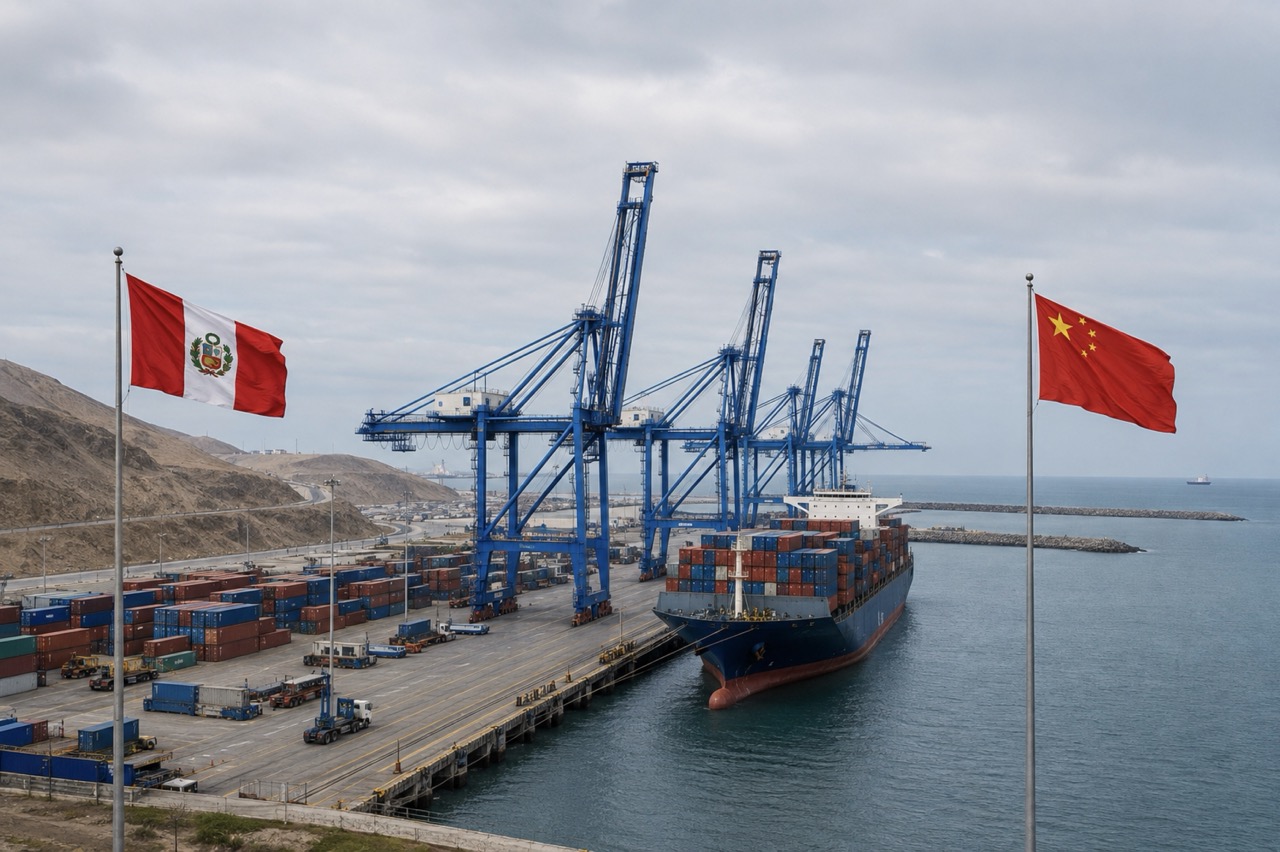
China continues its strong trade and investment engagements with all ASEAN partners, exercising its well-versed economic statecraft to consolidate its influence in the region. Most notably, Beijing has leveraged a network of free trade agreements and regional trade frameworks, such as the Regional Comprehensive Economic Partnership (RCEP), to strengthen its economic ties within the region. Beyond RCEP, the China–ASEAN Free Trade Agreement is the most salient regional-level free trade agreement. Its most significant trade negotiations with ASEAN is the China–ASEAN FTA upgrade (Version 3), which concluded in October 2024, well before the introduction of Trump’s ‘reciprocal’ tariffs.[vii]
In 2023, China’s total trade with ASEAN surpassed $911 billion, up from $444 billion a decade earlier.[viii] This amounted to 15.5 per cent of China’s total trade, up from 12 per cent in 2013 and 9 per cent in 2005.[ix]
Hard line on regional security
Alongside its diplomatic charm offensive toward major Asian economies in response to the Trump administration’s erratic regional approach, Beijing has maintained a notorious hardline stance on security issues – most notably in the South China Sea and the Taiwan Strait. It has reinforced this position through military drills, paramilitary activities, and strong rhetoric from senior diplomats criticising the Philippines, Taiwan and other parties involved.
China’s veteran foreign minister, Wang Yi, reprimanded the Philippines and Taiwan on numerous occasions between late 2024 and 2025. Philippines, a close US ally, has frequently been singled out as Beijing’s primary target on the South China Sea. At the annual foreign ministers’ press conference during Beijing’s annual National People’s Congress, Wang likened the China–Philippines dispute to a shadow play, with a thinly veiled swipe at the US-led West. ‘The script is written by external forces, the broadcast outsourced to Western media, and the plot always centres on smearing China’, he said.[x]
On Taiwan, Wang has not only criticised the incumbent Taiwanese government, led by the Democratic Progressive Party (DPP), but has asserted that parts of Japanese political establishments maintain ties with ‘Taiwan independence forces’. He rejected the idea that a Taiwan contingency is a Japan contingency asserted that it would invite trouble for Japan itself.[xi]
Beijing’s hardline rhetoric has been matched by frequent military and paramilitary activities on both flashpoints in 2025. In early April, the People’s Liberation Army (PLA) Eastern Theater Command – which includes land, naval, air, rocket, and coast guard forces – launched a large-scale joint military exercise around Taiwan and nearby islands such as the Matsu and Kinmen islands, code-named ‘Strait Thunder 2025A’.[xii]
The scale and complexity of the two-day military drill was far greater than previous similar activities, and included an operation with Beijing’s latest aircraft carrier, Shandong.[xiii] Some analysts believe it was intended to enhance operational dominance rather than merely sending political warnings to the incumbent DPP government.[xiv] It marked a shift from random military posturing and demonstrated enhanced PLA readiness and strategic coordination, signalling a new normal of continuous pressure on Taiwan rather than sporadic displays of strength.
Moving to the South China Sea, China continues to practise ‘grey zone’ exercises, including ramming and water-cannon use by coastguards and militia. Such activities are intended to assert control without triggering full-scale conflict. China’s paramilitary presence is mostly near Scarborough Shoal and the Second Thomas Shoal. These actions are part of a broader strategy of asserting dominance in disputed maritime zones by the South China Sea and have prompted both diplomatic backlash and deeper regional defence cooperation, especially from the Philippines and Japan.
An invisible mediator
Despite maintaining a hardline stance on these two geopolitical flashpoints, China has been less proactive when other regional conflicts have flared. In such moments, it has acted more as a passive security guarantor than an active mediator. In May and July 2025, clashes took place between India and Pakistan and between Cambodia and Thailand, both in China’s immediate neighbourhood. Instead of a rapid shuttle diplomacy with all parties involved, Beijing chose to play a quiet game.
There are several reasons for Beijing’s reticence. It has long been a strong advocate of the principle of non-interference in foreign affairs; therefore, being an active mediator contradicts what it supports. China’s close ties with Pakistan and cosy relationships with both Thailand and Cambodia make it hard to take sides. In addition, Beijing is afraid of entanglements in regional conflicts which might cost it both economically and diplomatically.
During the India–Pakistan clash, China did not take part in any mediation process beyond calling for restraints and dialogue.[xv] Its ‘all-weather’ partnership with Pakistan, and being the country’s largest defence supplier, both limited its capacity to engage with any meaningful meditation. But it did keep communication channels open with both countries.
In the Thailand–Cambodia conflict, Beijing came across as a quiet influencer rather than an outspoken mediator. It continues to support Phnom Penh both economically and diplomatically, meanwhile reassuring Bangkok of its friendship to avoid pushing Bangkok closer to Washington.
President Trump appeared more eager than his Chinese counterpart to take an active mediating role in both conflicts, even as the White House signalled a retreat from global leadership. While Beijing’s influence is expanding across several domains in Asia, its reluctance to mediate highlights an enduring challenge: how to translate economic statecraft into effective political influence.
Global implications
China clearly understands the opportunity brought by President Trump’s inward-looking foreign policy orientation and obsession with a ‘maximum pressure’ approach to the US’s trading partners in the region. Beijing has so far capitalised on Trump’s rhetoric by doubling down on its diplomatic charm offensive and strengthening its existing trade and investment toolkits with major Asian economies. In contrast to Trump’s unpredictability, Beijing has offered stability and consistency.
Judging by the frequency of recent engagements in Asia, China’s renewed diplomatic charm offensive has, to some extent, been effective. Its economic statecraft has successfully aligned with the domestic political economies of many Asian powers. By offering trade and investment opportunities, Beijing has, perhaps inadvertently, bolstered the legitimacy of some of its Asian trading partners’ regimes through the promise of prosperity creation.
China has consistently articulated a ‘development-driven’ foreign policy, which the majority of Asian countries welcome. This stands in contrast to the ‘values-driven’ diplomacy advocated by the United States and Europe. As a result, Beijing has found a receptive audience in Asia for the delivery of its various ‘Global Initiatives’. But this move began well before President Trump’s second term commenced.
While Beijing has capitalised on President Trump’s erratic approach over trade and diplomacy, it still falls short of raising its profile as a regional security manager. Its continued assertiveness in the Taiwan Strait and the South China Sea may deepen mistrust and suspicion from its Asian partners, casting a long shadow over Beijing’s regional ambitions.
In the broader context of US–China strategic rivalry, China might be eager to gain greater prominence in regional security affairs. By doing so, Beijing could further consolidate its influence in both South and Southeast Asia, while advancing its Global Initiatives. But having observed the US, China knows that becoming a global superpower would draw it into regional conflicts that it would rather avoid.
Policymakers in the United States and Europe must recognize that talk of ‘de-risking’ by Asian political elites reflects a fundamentally different attitude toward China. For these countries, the decision to pursue even closer economic and diplomatic ties with Beijing is shaped less by values than by pragmatism — and, to some extent, by a sense of inevitability stemming from their geographical proximity to China.
The participant lists of both the 2025 Shanghai Cooperation Organisation Summit and Beijing’s Victory Day parade tell a similar story, with many Asian countries represented at China’s showcase events.[xvi] Yet it would be a mistake to assume that these countries fully subscribe to Beijing’s diplomatic narratives or have collectively decided to confront the West in the region. Rather, many seek to expand their range of options in navigating the complex intersection of geography and geopolitics.
The war in Ukraine and the ongoing Israel–Gaza conflict have left some Asian countries seeing the West as hypocritical and holding double standards. Regardless of the Trump presidency, these dynamics have already provided China with room to manoeuvre in regional diplomacy. Judging by Beijing’s recent diplomatic efforts, its rivalry with the US-led West is likely to persist.
It remains unclear how China intends to develop its role in Asian security: whether it seeks to play a more active part in regional peace-making, and how it plans to amplify the voices of Asian countries. In other words, will China move beyond portraying itself as a stabilizing force in international affairs, and will it match words with deeds and act as a true regional security manager, extending its influence beyond its economic superpower status? President Trump has certainly given Beijing an opportunity, but China will move into this space with utmost caution.

 | Co-funded by the European Union. Views and opinions expressed are however those of the author(s) only and do not necessarily reflect those of the European Union or European Research Executive Agency (REA). Neither the European Union nor the granting authority can be held responsible for them. |
| UK participants in Horizon Europe Project European Hub for Contemporary China are supported by UKRI grant numbers 10108183 and 10108749. |
[i] PRC MFA (2025), ‘中央周边工作会议在北京举行习近平发表重要讲话 CPC work conference on neighbouring affairs held in Beijing, President Xi delivered an important remark’, 9 April 2025, https://www.mfa.gov.cn/zyxw/202504/t20250409_11590690.shtml
[ii] PRC MFA (2025), ‘The Central Conference on Work Related to Neighboring Countries Held in Beijing Xi Jinping Delivers Important Speech’, 9 April 2025, https://www.mfa.gov.cn/eng/xw/zyxw/202504/t20250410_11592755.html
[iii] India MEA (2025), “Prime Minister's bilateral meeting with Chinese President Xi Jinping”, 31 August 2025, https://www.mea.gov.in/press-releases.htm?dtl/40072
[iv] Bajpee, C. and Yu, J. (2025), ‘China and India May Be Moving Toward a More Coordinated Foreign Policy’, 27 August 2025, https://foreignpolicy.com/2025/08/27/sco-summit-china-india-relationship/
[v] Japan MFA (2024), ‘Second Japan-China High-Level People-to-People and Cultural Exchange Dialogue’, 25 December 2024, https://www.mofa.go.jp/a_o/c_m2/ch/pageite_000001_00721.html
[vi] PRC MFA (2025), ‘习近平同韩国总统李在明通电话 Xi Spoke with Lee Jae Myung over the phone’, 10 June 2025, https://www.mfa.gov.cn/zyxw/202504/t20250409_11590690.shtml
[vii] PRC State Council (2024), ‘China, ASEAN issue joint statement on conclusion of FTA upgrade negotiations’, 11 October 2024, https://english.www.gov.cn/news/202410/11/content_WS6708756ec6d0868f4e8ebaea.html
[viii] ASEAN (2025), ‘ASEAN-China Economic Relation: Overview’, https://asean.org/our-communities/economic-community/integration-with-global-economy/asean-china-economic-relation/
[ix] Ibid.
[x] Wang, Y (2025), “王毅谈菲律宾南海闹剧:甘当棋子最终只会被抛弃 Wang Yi on Philippine and South China Sea farce: A shadow play and left behind”, 7 March 2025, https://www.fmprc.gov.cn/nanhai/chn/wjbxw/202503/t20250307_11570213.htm
[xi] PRC MFA (2025), ‘Member of the Political Bureau of the CPC Central Committee and Foreign Minister Wang Yi Meets the Press’, 7 March 2025, https://www.mfa.gov.cn/eng/wjbzhd/202503/t20250307_11571025.html
[xii] PRC MOD (2025), ‘Chinese military launches “Strait Thunder 2025A” exercise in middle and southern sea areas of Taiwan Strait’, 2 April 2025, http://eng.mod.gov.cn/xb/News_213114/TopStories/16378460.html
[xiii] Bodeen, C. and Lai, J. (2025), ‘China conducts military drills focusing on Taiwan Strait’, AP News, 2 April 2025, https://apnews.com/article/china-military-drills-taiwan-strait-shipping-5a8897368bdabc7038c170bf5b20a7f6
[xiv] Yang, T and Tang, K. T. (2025), ‘ ‘”Strait Thunder-2025A” Drill Implies Future Increase in PLA Pressure on Taiwan’, 11 April 2025, China Brief, (25)7, Jamestown Foundation, https://jamestown.org/program/strait-thunder-2025a-drill-implies-future-increase-in-pla-pressure-on-taiwan/
[xv] Wu, Q. (2025), ‘China urges peace talks in India-Pakistan tensions’, China Daily, 7 May 2025, https://www.chinadailyhk.com/hk/article/611160
[xvi] Mistreanu, S. (2025), ‘A look at the world leaders attending China’s SCO summit and military parade’, AP News, 1 September 2025, https://apnews.com/article/china-military-parade-sco-putin-xi-kim-7d71b8ef9dc3bcc5de2ee192debd87c7